Field Walk – January 2015
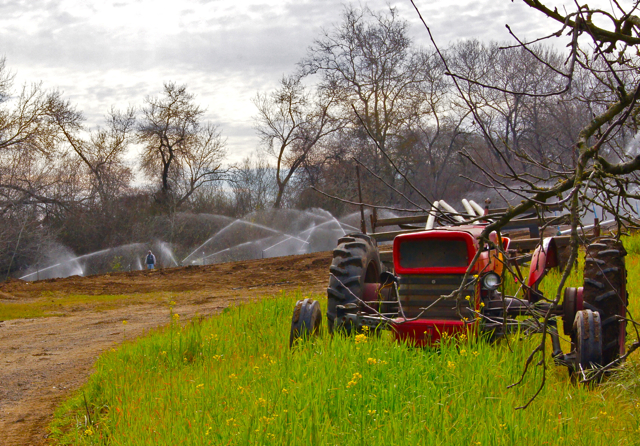
The farm's winter fields are a patchwork of cover crops and winter veggies. Take a walk through them with us and see all the changes.
It seems strange to have to irrigate in January yet there were only a couple of brief rain storms in November and December and none this month, so using groundwater is a must.
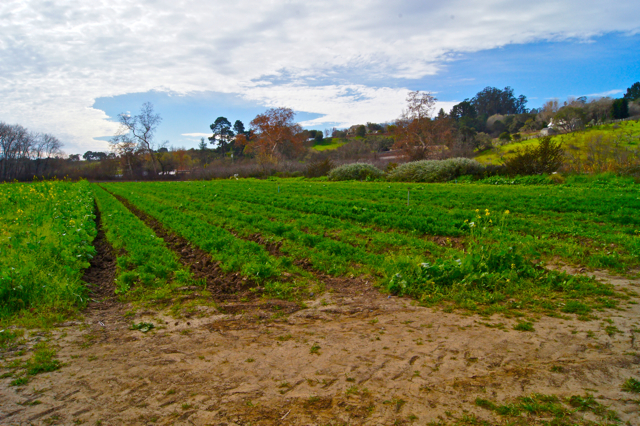
These rows of carrots are where cherry tomatoes were growing just a few months ago.
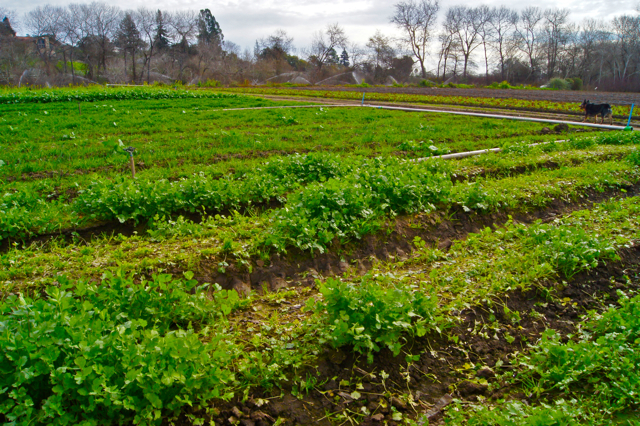
This field was full of pepper plants in the summer. Now there are rows of cilantro, onions, carrots, and purple top turnips.
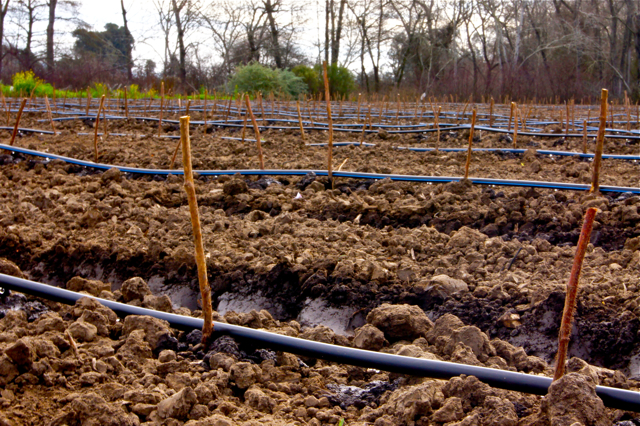
Drip irrigation is becoming more necessary to help conserve precious water.
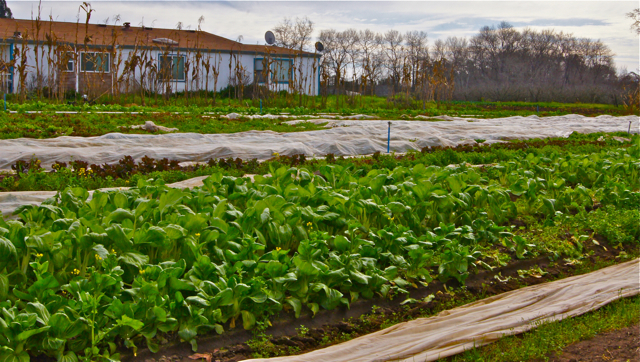

These year-old raspberry canes that were lush and green in summer are getting pruned back.
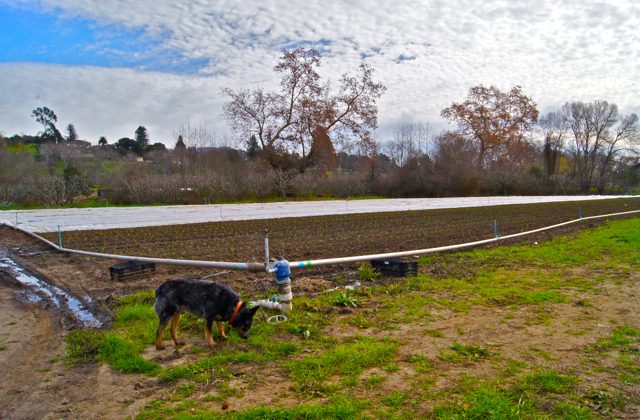
This was a field of 2-3 year old raspberry canes. They are gone now, full of recently transplanted greens.
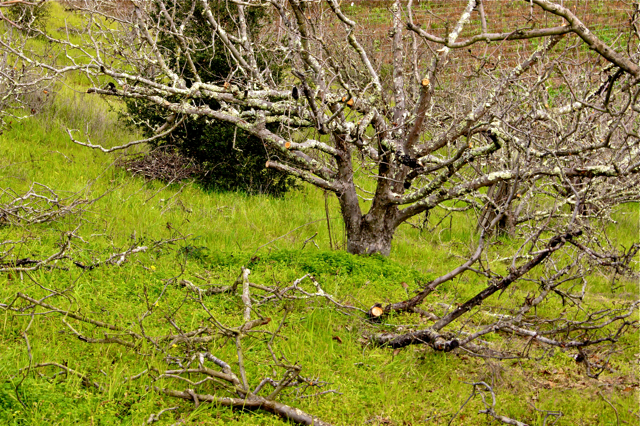
Berry canes are not the only thing getting pruned this month, so are apple trees.
While some apple trees grow without guidance, the Fujis are espaliered – trained along wires that support the apple crop weight and make harvesting easier.
Near the trees are next season's strawberry fields – the farm plants over 80,000 strawberry starts.
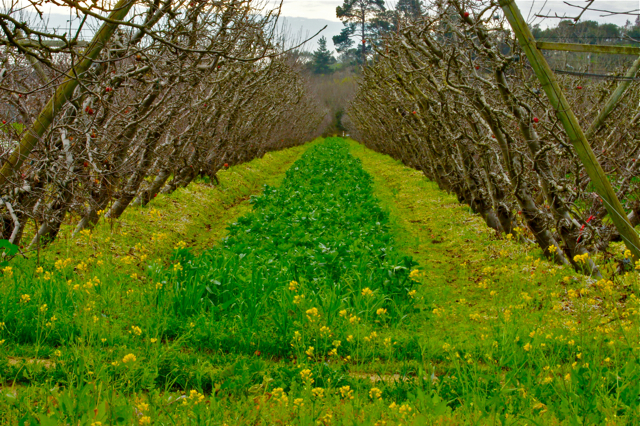
Cover crops are sown in between the rows of espaliered Royal Gala apple trees.
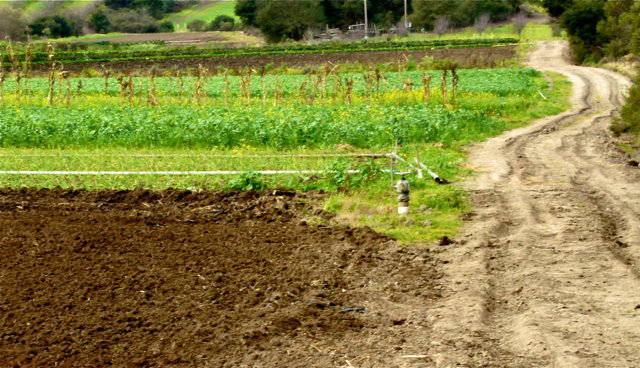
These fields are a patchwork of recently plowed ones, current season rowcrops, and cover crops.
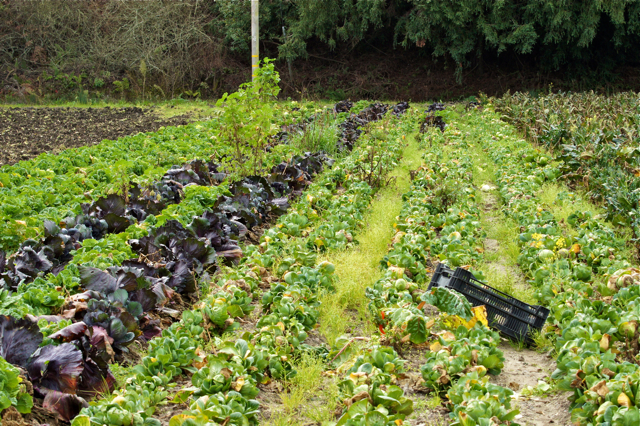
Green and red cabbage tough out the colder weather, producing sugars, making them sweeter.

Next to the rows of cabbage are ones of kale. The Lacinato is being harvested for CSA shares.
Bolting broccoli plants lend a splash of color and brightness to the muddy brown fields. Rows of green garlic for upcoming shares are bordered by a field of cover crop.
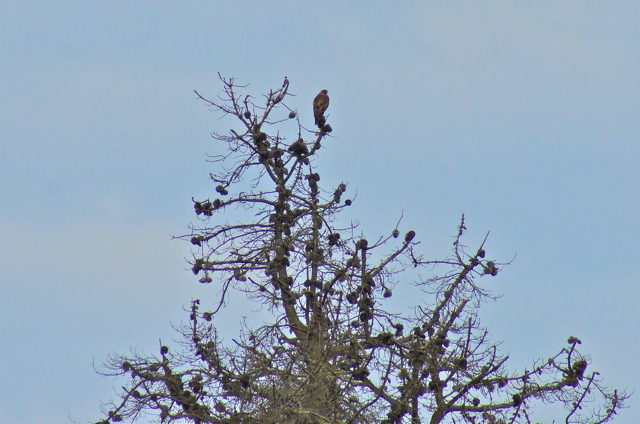
Red-tailed and -shouldered hawks are a common sight at the farm. On gopher patrol, this one is perched high in a dead pine overlooking the fields.
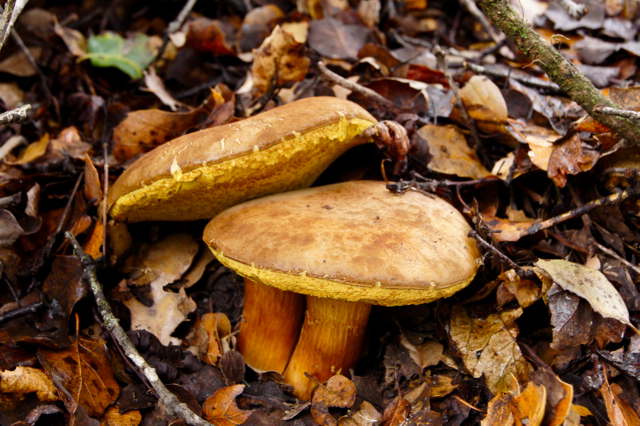
During winter, mushrooms, like boletes, are common in the wilder sections of the farm. Recently cultivated and formed rows are ready for transplants. Just like the rest of the farm's fields, the Farm Discovery fields are plowed, ready for new crops to be planted by future farmers.